
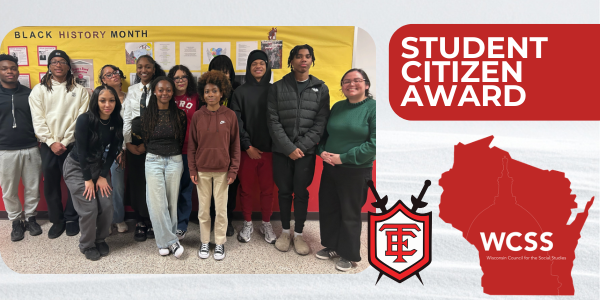
The AP African American Studies class at Wauwatosa East High School has been named a recipient of the WCSS Student Citizen Award, honoring the students' extraordinary contributions to scholarship, critical thinking, and civic dialogue during the 2025-2026 school year – the first year the Wauwatosa School District has offered this course.
As pioneers of AP African American Studies in the district, these students have taken on a responsibility that extends far beyond the classroom. They are shaping the future of how African American history will be taught and experienced in Wauwatosa for years to come.
These students have done a wonderful job learning and critically thinking through the important history of African Americans. They have elevated their discussions to address the significance of this class within the Wauwatosa School District and championed the belief that all students – regardless of their background – deserve to learn African American Studies.
The class was among the first to pilot AP African American Studies in the district, bringing both academic rigor and a deep sense of purpose to their work. Throughout the year, students engaged with primary sources, conducted critical analysis, and participated in meaningful conversations about the enduring impact of African American history on American society and culture.
Beyond the curriculum, the students have been vocal advocates for the course itself – articulating why this history belongs in every student's education and why representation in the classroom matters. Their voices have helped build a stronger case for inclusive, comprehensive history education across the Wauwatosa School District.
The WCSS Student Citizen Award recognizes students who demonstrate outstanding citizenship, leadership, and engagement with the social studies. This class exemplifies those values in every sense.
The Wisconsin Council for the Social Studies promotes excellence in social studies education across the state through professional development, advocacy, and recognition programs.